
Mindfulness-based cognitive therapy
Mindfulness-based Cognitive Therapy (MBCT) was designed specifically to help people who are prone to recurring depression. It combines mindfulness techniques like meditation, breathing exercises and stretching with elements from cognitive therapy to help break the negative thought patterns that are characteristic of recurrent depression.
Long-term courses of antidepressants are typically used to treat recurring depression. However, almost three-quarters of GPs think mindfulness meditation would be helpful for people with mental health problems, and a third already refer patients to MBCT on a regular basis.
MBCT has been scientifically proven to help people with a range of mental health problems such as:
- Anxiety disorders
- Bipolar disorders
- Chronic fatigue syndrome
- Insomnia
MBCT is also recommended by the National Institute for Clinical and Health Excellence (NICE) as an effective treatment for people who suffer from recurrent episodes of depression.
MBCT teaches people to pay attention to the present moment, rather than worrying about the past or the future, and to let go of the negative thoughts that can tip them over into depression. It also gives people a greater awareness of their own body, helping them to identify the signs of oncoming depression and ward off the episode before it starts.
MBCT techniques include the ‘three-minute breathing space’ – a meditation exercise that gives people a quick and easy way to step back from stressful situations – and preparing ‘relapse prevention plans’ to help people lift their mood when depression starts to creep up on them. It’s so effective that it could reduce the risk of a person experiencing a recurrence of depression by over 50 per cent.
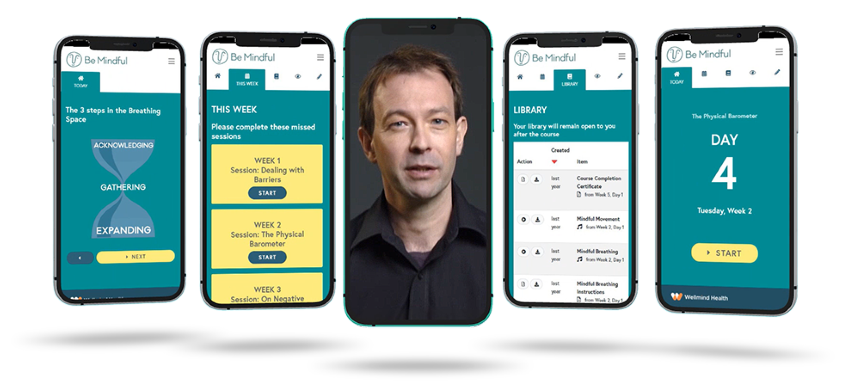
The core elements of MBCT are included in our online mindfulness course
